

What is prophecy, and how does it affect the lives of ordinary folk like you and me? Before discussing the biblical origins and applications of prophecy, let us draw a distinction between worldly and religious prophets.
A worldly prophet could predict something as a religious prophet could. The difference between the two is the source of their predictions.
The worldly prophet might speak from knowledge, inspiration, or a spiritual source, as in the instance of a medium or a psychic. The religious prophet would specifically claim an inspired declaration of divine will and purpose. In other words, a message from God.
The Lord said to Moses, “See, I will come to you in a thick cloud. So, the people may hear when I speak with you and may believe you forever.” (Exodus 19:9)
All accounts of Divine revelation in the history of religion rely on claims that God communicated with an individual or a small, select group. Faith in the testimony of those individuals was the only basis for believing that God had spoken to them. Judaism is the only religion claiming revelation occurred in front of an entire people who personally witnessed God communicating with Moses.
Outside of the Jewish claim, we have a simple process to determine whether a person is a true prophet, worldly or religious. The process is this: did what the prophet say come true? Just as the proof of the pudding is in the taste.
From a Christian viewpoint, prophets and prophecies are part of the gifts of the Spirit. Teaching the gifts of the Spirit is a broad subject that no one could cover in an article like this. It is expedient, therefore, to discuss only prophets and prophecies in this article.
Before we do this, it would be advisable to look at a small portion of church history before discussing Paul’s teachings.
The epistles were possibly not written before 50 AD, the gospels 70 AD. There were no other known epistles written beyond 100 AD. There is no bible record of church activities after 100 AD. The next mention of the gifts of the Spirit appeared with the Azuza Street revival in 1906. I mention these essential facts to prepare any genuine reader who wishes to understand and practice prophecy.
Out of Azuza Street arose the Pentecostal denominations of today. From the Pentecostal churches came the modern-day charismatic churches. All these recognize and practice the gifts of the Spirit.
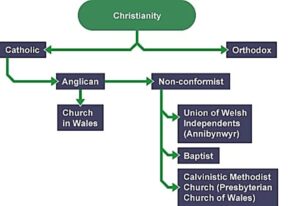 From the root of the New Testament church emerged the Catholic Church, Lutheran Church of England, Methodist, Presbyterian, and many others. This group is called the ‘Mainline Churches’ and generally does not accept the 5-fold ministry or practice the ‘Gifts of The Spirit’ as Paul outlined in his letters. You may be asking, what’s all this got to do with prophets and prophecy?
The genuine reader of this article who wishes to practice the gifts of the Spirit must understand the prophetic role in the body. (Church or small group.) They may want to know if they are part of the 5-fold ministry or have any or all of the gifts of the Spirit. So they should read and understand this state in today’s churches. These precious souls must find a home among believers of like mind, or they may become disillusioned.
Bearing this state in mind, let’s move on.
In part two, we will discuss how the five-fold ministry functions. How is one recognized as a prophet, and then the prophet’s role in the body? (Church or small group.) I look forward to you joining me then.
Love and Blessings
Peter James